Fairfax County
Tysons, Virginia
Fairfax County’s emerging downtown: four Silver Line stations, two major malls, and a growing residential core of high-rise condominiums and apartments where an office park used to be.
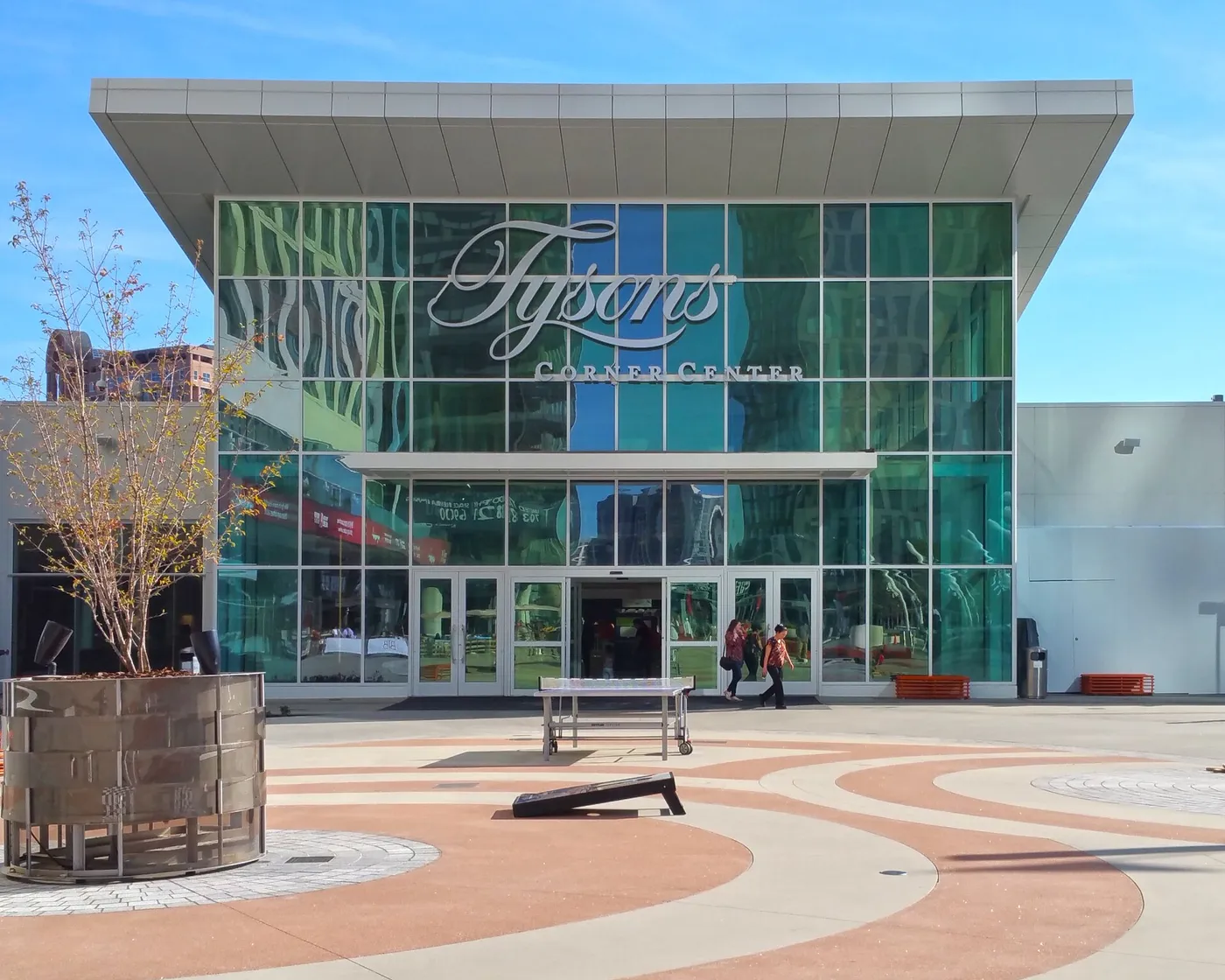
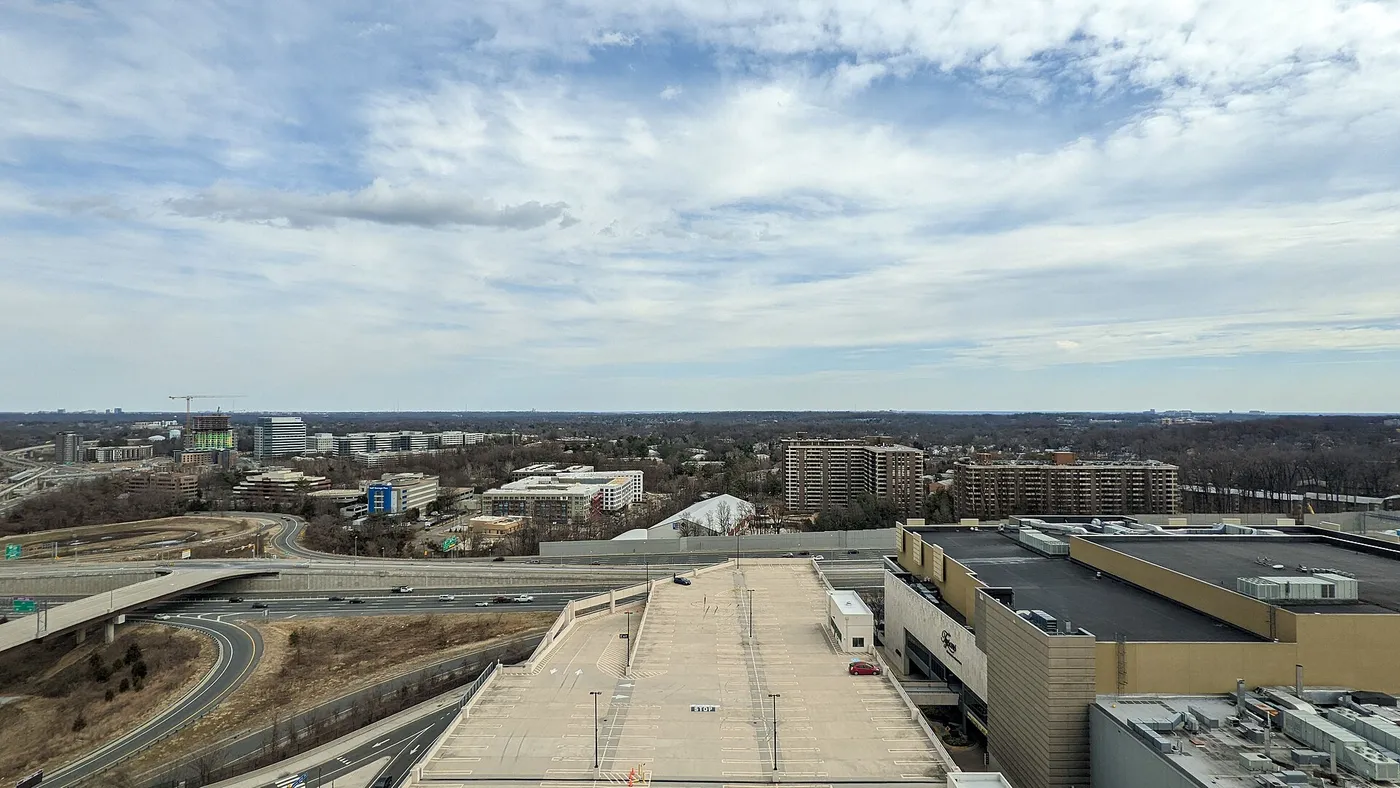
Tysons is Fairfax County’s attempt to turn an office park into a downtown, and it is further along than most people expect. Four Metro stations opened here in 2014, and since then a district known mainly for two malls and a great deal of traffic has been adding residential towers, plazas, and street-level retail at a steady pace.
Four stations, one district
The Silver Line stops at McLean, Tysons, Greensboro, and Spring Hill, spaced along Route 7 and Route 123. That is an unusual amount of rail for a suburban area, and Fairfax County’s long-range plan leans on it: the closer to a station, the denser the zoning, with the goal of a walkable core surrounded by the established single-family neighborhoods of Vienna and McLean.
The pieces
Tysons Corner Center, the region’s largest mall, connects to its Metro station by a pedestrian bridge and now has residential and hotel towers on its deck. Tysons Galleria and the office towers along International Drive sit on the north side. The Boro, near Greensboro station, is the clearest example of the new Tysons: a grocery, a cinema, a plaza, restaurants, and condominium and apartment towers arranged around walkable streets. At the eastern end, Capital One Center pairs the bank’s headquarters with a performing arts hall, a hotel, and a public plaza. The western end, around Spring Hill and Old Courthouse Road, holds the older garden-style condominium and townhouse communities.
The housing
Almost all for-sale housing in Tysons is condominium, and most of it is new — high-rise buildings from the 2010s onward, with concierge desks, fitness centers, pools, and the monthly fees those imply. The older garden-style condos and townhouses on the west side are generally the more attainable entry. What Tysons does not have is much single-family housing; for that, buyers look to the adjacent Vienna and McLean neighborhoods.
One practical caution: the district is a construction site in places, and the parcel next to a building today may be a tower in three years. Reviewing what is approved nearby is worth the time.
Getting around
The Beltway, the Dulles Toll Road, Route 7, and Route 123 all converge here, which is why Tysons became a business center and why its traffic is what it is. With the Silver Line, though, commuting into Arlington and the District without a car is realiztic. Both airports are roughly 20 to 30 minutes out.
Buying or selling here
Buyers should compare buildings as carefully as units: fees, amenities, reserves, and the walk to a station drive value more than finishes do. Sellers are competing against new construction, so condition and building reputation matter. And because attendance areas meet here, families should confirm the school assignment for a specific building with FCPS.
Communities in Tysons
- Tysons Corner Center area
- The largest mall in the region, with the Tysons Corner Metro station connected by a pedestrian bridge and residential towers rising around it.
- Tysons Galleria and International Drive
- The upscale mall and the office and hotel towers along International Drive, near the Tysons and Greensboro stations.
- The Boro
- A newer mixed-use district near Greensboro station with a grocery, cinema, plaza, and condominium and apartment towers.
- Scotts Run and Capital One Center
- Redevelopment around McLean station, including Capital One’s headquarters campus with its performing arts hall, hotel, and public plaza.
- Spring Hill and Old Courthouse
- The western end near Spring Hill station and the older garden-style condominium and townhouse communities along Old Courthouse Road.
Schools
Tysons is served by Fairfax County Public Schools (FCPS). Because Tysons sits at the meeting point of several attendance areas, homes here can feed the McLean, Marshall, or Madison pyramids depending on location, and boundaries have been revisited as residential development has grown. Confirm the current assignment for a specific address with FCPS.
Commuting
Tysons is the most transit-served place in Fairfax County, with four Silver Line stations — McLean, Tysons, Greensboro, and Spring Hill — all opened in 2014. The Capital Beltway (I-495), the Dulles Toll Road, Route 7, and Route 123 all meet here, which is both the reason Tysons exists and the source of its traffic. Reagan National and Dulles airports are each roughly 20 to 30 minutes away.
Market
Tysons is almost entirely a condominium and apartment market, and a young one: most for-sale inventory is in high-rise buildings from the 2010s onward, with amenities and monthly fees to match, plus a stock of older garden-style condos and townhouses on the western side. Buyers here are choosing walkability, transit, and building amenities over land. Because the district is still being built out, what is next door to a given building can change substantially over a few years, and that is worth understanding before buying.
Common questions
Is Tysons a city?
No. Tysons is an unincorporated area of Fairfax County with no separate government, though it is the county’s largest employment center and is being planned and rebuilt as its downtown. It was long known as Tysons Corner; the county and business community shortened it to Tysons in 2012.
How many Metro stations does Tysons have?
Four, all on the Silver Line and all opened in 2014: McLean, Tysons, Greensboro, and Spring Hill. Very few suburban districts anywhere have that density of rail service, and it is the foundation of the county’s plan to keep adding housing here.
What kind of homes are for sale in Tysons?
Mostly condominiums in high-rise buildings, the majority built since 2010, with concierge service, fitness centers, and pools, and monthly fees that reflect them. There are also older garden-style condominium and townhouse communities toward Spring Hill and Old Courthouse Road, which are generally the more attainable options.
Is Tysons walkable?
Increasingly, in patches. The areas around the stations — The Boro, Tysons Corner Center, Capital One Center — are genuinely walkable, with sidewalks, plazas, and shops at street level. Between them, the legacy of a district built for cars still shows in wide roads and long blocks, and the county is filling in the gaps as development proceeds.
What schools serve Tysons?
Fairfax County Public Schools. Tysons sits where several attendance areas meet, so a specific building may feed the McLean, Marshall, or Madison pyramid. As residential development grows, boundaries here have been revisited, so confirm the current assignment with FCPS.
Current Tysons listings are available through my search site.
Last updated 2026-09-07.